
In 2026, “the best camera phone” isn’t about chasing the biggest megapixel number on a spec sheet. It’s about dependability. Whether you’re framing a toddler’s first bike ride, filming a band in a dim club, or capturing a golden-hour skyline, the camera in your pocket should deliver consistent, natural results without fuss.
If you want flagship-level quality without the flagship spend, Certified Pre-Owned (CPO) devices are a smart upgrade path. Refurbished models can deliver high-end optics and processing at a friendlier price. If you’re upgrading for the camera, there are many standout options in 2026.
Standout Features Roundup
- Colour Science That Flatters: The top smartphone cameras balance skin tones, skies, and shadows in a way that looks true rather than processed.
- Reliable Autofocus: Kids, pets, and unpredictable street moments are sharp because the camera knows what you meant to capture.
- Versatility Across Lenses: Ultrawide, main, and telephoto all render with matching colours and detail, so your gallery doesn’t look like three different cameras stitched together.
- Video Tools For Creators: From logarithmic profiles to external mic support, the best phones are ready for TikTok reels, YouTube Shorts, or even client projects.
Why Phone Camera Quality Matters
For most of us, the phone is the only camera we carry day to day. It’s at the park, on the subway, in the middle of a concert crowd, or beside a birthday cake when the candles are blown out. That constant presence makes its reliability more important than sheer novelty.
A dependable phone camera means fewer missed moments:
- Fast focus locks onto a smile before it fades.
- Colour accuracy ensures family skin tones look flattering and natural, not orange or washed out.
- Stable video makes handheld walk-and-talks usable without needing a gimbal.
Flashy numbers like “200MP” or “8K video” sound exciting, but they don’t matter if the results look artificial or if the phone struggles in dim restaurants or during action shots. Camera quality matters because memories deserve to be captured once, not re-shot endlessly.
If you’re curious about what else to consider beyond photography, our Cell Phone Buying Guide covers the essentials like battery, display, and storage.
Mobile Photography Trends
Smartphone photography in 2026 is being shaped by how we share. Social-first platforms like Instagram Reels, TikTok, and YouTube Shorts now influence how phones are designed.
Social-first Shooting
- Vertical video capture in crisp 4K or 8K ensures content looks native on every app.
- AI-assisted reframing makes it easy to shoot once, then crop for multiple platforms.
- Real-time filters and editing pipelines help creators polish clips without exporting to a laptop.
Travel and Family Needs
- Zero-lag shutters prevent toddlers or pets from appearing as a blur.
- Multi-lens continuity means switching between ultrawide and tele mid-video doesn’t introduce jarring colour or exposure shifts.
- Smarter HDR balances sunsets and bright skies with shaded faces, avoiding the “halo” look that plagued early HDR.
Creator Workflows
- Support for LOG profiles and 10-bit capture provides flexibility in colour grading.
- External mic input and improved noise reduction make vlogging outdoors easier.
- Seamless handoff to desktop editing apps ensures creators can move from phone to full edit suite without hiccups.
Mobile photography in 2026 is less about gimmicks and more about trust: trusting your phone to adapt to whatever you’re shooting, so you can focus on the story instead of the settings.
Importance of Features and Specs
While photography is subjective, a few specs tell you a lot about real-world performance:
- Sensor Size & Pixel Binning: Bigger sensors gather more light. Combined with pixel-binning, they turn small pixels into larger “virtual” pixels for clean night shots.
- Zoom Technology: Periscope telephoto lenses use folded optics to achieve 5–10× optical zoom without sacrificing sharpness. Great for wildlife, stadiums, or landmarks.
- Stabilization: Optical image stabilization (OIS) keeps handheld shots sharp in dim light, while electronic stabilization (EIS) smooths out walking videos. Premium models blend both for near-gimbal results.
- Computational Photography: Image signal processors (ISP) and neural processing units (NPU) shape final results as much as the hardware. They control HDR, de-noise, and tone curves.
When you’re weighing specs, remember: hardware sets the baseline, but software determines consistency. Two phones with similar sensors can deliver radically different results because of how their algorithms interpret the scene.
Top Camera Phones in 2026
Specs and lab charts are helpful, but what matters most is how phones perform in the real world. Which ones reliably deliver sharp, balanced photos and smooth video across different conditions?
Below, you’ll find our top picks for 2026’s camera champions, broken down by use case.
Whether you want the best all-rounder, the strongest low-light shooter, or the smartest budget buy, these phones stand out. If you’d rather shop last year’s flagships for less, remember that CPO devices often rival current mid-range models at a fraction of the cost.
Best Overall Camera Phone
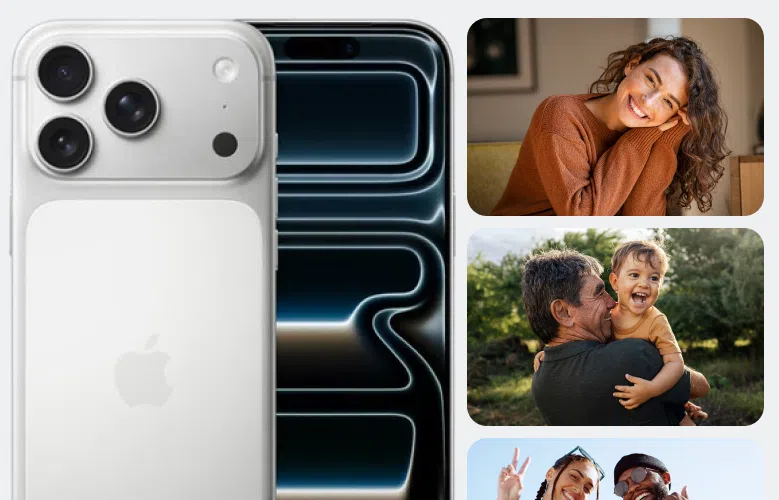
Our Pick: iPhone 17 Pro / Pro Max
The iPhone 17 Pro series keeps Apple in its familiar spot as the go-to camera for most people. What makes it best overall is not one jaw-dropping spec, but consistency. Every lens in the triple 48MP array (main, ultrawide, and telephoto) produces nearly identical colours and contrast. This means whether you’re shooting a landscape at 0.5×, a portrait at 3×, or a street detail at 5×, the images flow together seamlessly in your gallery.
Skin tones remain one of Apple’s greatest strengths. Faces look natural under daylight, fluorescent, and mixed light sources, without the waxiness or strong hue shifts seen on other devices. Autofocus is sticky and responsive, catching toddlers mid-run or pets mid-jump without lag. The shutter fires immediately, which feels more like a DSLR than a smartphone.
On the video side, Apple extends its lead with ProRes RAW recording, HDR video, and even Dual Capture, letting you film with the front and back cameras at once. Stabilization is smooth for walk-and-talks, and audio capture is cleaner with upgraded wind filtering.
Honourable Mentions
- Samsung Galaxy S25 Ultra: Unmatched zoom reach and versatile quad-lens system.
- Google Pixel 10 Pro: Computational HDR and AI-powered zoom for point-and-shoot ease.
Best for Low Light Photography

Our Pick: Google Pixel 10 Pro
When the lights go down, the Pixel 10 Pro continues Google’s low-light legacy. Its large sensor and refined Night Sight engine pull clean detail from the darkest scenes while preserving natural colour. Instead of flattening everything into bright daylight, the Pixel keeps shadows rich and skies a believable midnight blue. Streetlights glow without harsh halos, and skin tones—especially darker complexions—stay true to life.
Texture retention is impressive: fabrics, hair, and foliage keep their depth instead of melting into noise reduction. The camera app’s automatic multi-frame blending works so well that most people never need manual tweaks, but for creators, RAW capture and manual exposure tools leave room for post-processing.
Strong Alternatives
- Samsung Galaxy S25 Ultra: Its huge 200 MP sensor and adaptive f/1.7–f/2.4 aperture excel in dim environments, while the 5× telephoto lens remains surprisingly usable at night for skyline or concert shots.
- iPhone 16 Pro / Pro Max: Apple’s latest Photonic Engine brightens shadows while preserving contrast and warmth, producing balanced indoor and night portraits with less motion blur.
Astrophotography and Night Cityscapes
Both the Pixel 10 Pro and Galaxy S25 Ultra include dedicated Astro modes. Handheld results look great, but a mini tripod still makes the biggest difference for crisp, noise-free star fields or silky light trails. If you shoot concerts, campfires, or night markets, these low-light performers will outshine mid-tier phones by a wide margin.
Best Budget Camera Phones
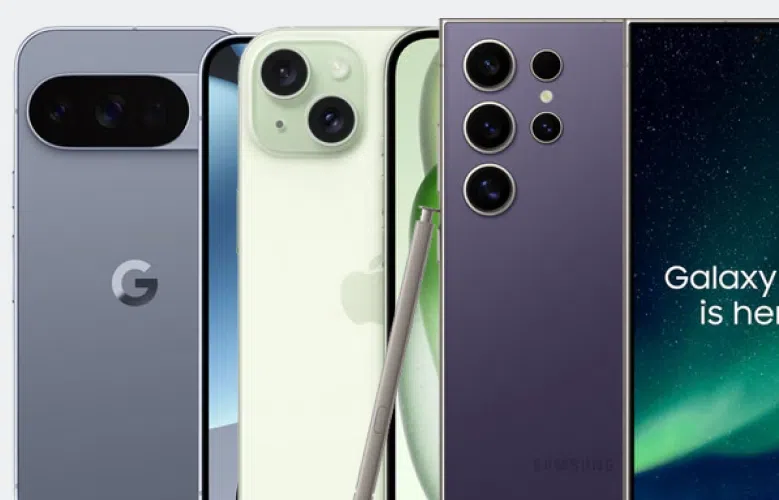
Our Pick: Previous-Gen Flagships at Mid-Range Prices
In 2026, the smartest “budget” buys aren’t typical mid-tier models—they’re last year’s flagships that now sell for mid-range money. These phones deliver the kind of imaging power once reserved for top-tier buyers: larger sensors, better stabilisation, and advanced video options, all wrapped in proven, durable builds.
Standout Picks for 2026
Each of these models delivers flagship-grade camera quality at today’s mid-range prices, making them exceptional values for everyday photographers and creators alike.
- Google Pixel 9 / 9 Pro: Google’s refined HDR+ and Night Sight still define mobile low-light performance. You get detailed, true-to-life shots without harsh colour shifts, and Portrait mode handles mixed tones beautifully.
- iPhone 15 / 15 Plus: The 48 MP main sensor captures sharp, vibrant images with Apple’s signature colour accuracy. Photonic Engine improvements keep faces bright even in dim lighting, while Action Mode and Cinematic Mode bring smooth, cinematic video to casual clips.
- Samsung Galaxy S24 Ultra: A 200 MP sensor and adaptive telephoto lenses make this one of the most versatile camera systems you can get for mid-range spending. Its strong night performance, realistic tone mapping, and 5× optical zoom set it apart for travel and city photography.
All three of these phones balance ease of use and professional output, offering bright, shareable photos and high-quality video without needing manual controls.
Save big when you shop our selection of Certified Pre-Owned phones. 64-point inspection and a limited lifetime warranty for eligible customers*.Save up to 50% on a new phone!
Key Features to Look for in a Camera Phone
When you’re comparing today’s smartphones, it’s easy to get lost in megapixel counts and marketing buzzwords. Instead, think like a photographer: what matters most is how lenses, software, and video tools come together in real-world use. The checklist below covers the essentials. These are the details to pay attention to whether you’re shopping new or considering a CPO phone. If you already have a strong device, the right accessories can also help you squeeze the best performance out of your camera.
Lens Quality
Every shot starts with the lens, and the quality of glass can make or break your photos.
- Primary Lens: This is the workhorse. Look for sharpness across the whole frame, not just the centre. Reviewer “brick wall” or foliage test shots are great indicators of edge-to-edge detail.
- Flare Resistance: Strong coatings prevent washed-out images when you’re shooting sunsets, concerts, or street lamps at night. Cheaper phones often flare badly in these conditions.
- Telephoto Options
- Standard tele (2–3×) is perfect for natural-looking portraits because it avoids the wide-angle distortion of a main lens.
- Periscope tele (5–10×) is great for travel, concerts, or stadiums, but note the minimum focus distance; get too close and your subject may blur.
- Ultrawide Lenses: Best for architecture and landscapes, but check for edge distortion and colour consistency with the main lens. The best ultrawides double as macro shooters, letting you capture flowers or food in crisp detail without a dedicated lens.
A good lens setup means you can frame more creatively without worrying about jarring quality gaps between shots.
Image Processing & Software
Hardware gets the spotlight, but software defines the look. Today’s phones rely heavily on computational photography to shape results:
- Tone Mapping & HDR: The difference between a washed-out sky and a glowing sunset comes down to processing. The best phones recover highlight detail without flattening the entire scene.
- White Balance Stability: Many mid-range models struggle with indoor lighting, flipping between yellow and blue tones. A top-tier phone locks into a stable balance, even under mixed conditions.
- Skin Tones: Google, Apple, and Samsung have each put big emphasis on inclusive rendering. Darker skin tones in particular look truer on the latest flagships compared to older devices.
- Portrait Mode: Look at hair, glasses, or pet fur in sample galleries. A good phone separates subjects naturally, creating bokeh that mimics DSLR optics instead of a smeary blur.
- Camera App Ergonomics: Pro controls, RAW/DNG capture, and shortcut customization help advanced users, while intuitive point-and-shoot interfaces matter for casual shooters.
- Updates: Manufacturers now push software updates that noticeably improve cameras months after launch. Choosing a brand with a strong update record ensures your phone gets better with time.
This is why two phones with nearly identical sensors can produce wildly different results: the software pipeline makes the call.
Video Capabilities
Smartphone video has become just as important as stills. If video is your priority, here’s what to check:
- Resolution & Frame Rates: 4K at 60fps is the sweet spot for most users, balancing clarity and smoothness. For slow motion, 4K120 is becoming more common, while 8K can be useful for cropping, but isn’t essential unless you edit heavily.
- Colour Depth & Formats: Look for LOG or HDR profiles with 10-bit capture. These preserve highlight roll-off and subtle colour shifts, giving editors more latitude in post-production.
- Stabilization: Phones now combine optical and electronic stabilization. Test walking or running clips, premium phones should produce near-gimbal results in “action” modes, though you’ll notice a tighter crop.
- Audio Quality: Clean sound is half the video. Support for external mics (via USB-C or Lightning adapters) plus built-in wind-reduction profiles makes a huge difference for vlogging or outdoor shoots.
- Autofocus Behaviour: Continuous AF should track smoothly without hunting or “breathing” (a visible zoom effect during focus shifts). Check reviews with subject-tracking demos to see how your pick performs.
Should You Buy a Phone Just for the Camera?
Cameras are often the deciding factor when people upgrade, but should it be the only reason? Sometimes, yes. If you’ve got big life moments ahead, a wedding, a new baby, a big trip, or you’re diving into content creation, a stronger camera system can be worth the investment. Flagship models bring sharper low-light shots, faster autofocus, and pro-level video formats that mid-range phones simply can’t match.
But other times, the solution is simpler. If your photos are coming out blurry or dull, the problem might not be your phone’s overall capability. Common culprits include a scratched lens cover, dust in the camera housing, or a failing focus motor. In these cases, a quick iPhone repair or Samsung repair can restore your camera without requiring a new device.
Accessories can also solve problems affordably. A tripod or grip stabilizes your shots, and clip-on lights improve indoor portraits.
If you do decide to move on, think about value recovery. You can sell your phone in-store or use the Sell Your Phone Calculator Tool to get an estimate online before trading up.
Why Refurbished Camera Phones Are a Great Value
The best-kept secret in smartphone photography is that last year’s flagship still outperforms many brand-new mid-range models, especially in low light and video. Phones like the Pixel 9 series, iPhone 15 series, and Galaxy S24 Ultra deliver premium stabilisation, richer dynamic range, and pro-grade video tools for far less than this year’s top releases. Buying Certified Pre-Owned gets you that performance at a lower cost while keeping an excellent device in use longer.
Every phone sold through Mobile Klinik’s Certified Pre-Owned program is professionally inspected, tested, and backed by warranty, including the Limited Lifetime Warranty for eligible customers. Devices undergo Apkudo’s 64-point diagnostic testing, which checks lens sharpness, stabilisation, autofocus, battery health, and storage integrity before anything reaches the shelf.
For shoppers new to refurbished, we’ve put together resources to help you understand the options: Why Buy a Refurbished Phone?, Refurbished Phone Grades, Open Box vs Refurbished Phones, and Refurbished vs Renewed Phones.
Pair a CPO flagship with a small kit of accessories, like a tripod, grip, and compact mic, and you’ve got a creator-ready setup that rivals brand-new flagships.
Save big when you trade in your old phone for a new Certified-Pre-Owned phone. Get the latest features at a fraction of the cost.Time for an upgrade?
Final Frame: Camera-Ready Choices
So, which phone should you pick? For most, the iPhone 17 Pro/Pro Max offers the most balanced all-around camera system. If zoom and versatility matter most, the Galaxy S25 Ultra is your powerhouse. And if you prefer a smaller phone with point-and-shoot brilliance, the Pixel 10 Pro won’t disappoint.
Before you decide, check out real-world sample galleries and try the phones in hand at your nearest Mobile Klinik store. And remember, if it’s a camera hiccup rather than an upgrade you need, you can always start a repair instead.